Weight loss can stall even when meals, movement, and effort stay consistent. When insulin runs high to control glucose, the missing clue may be metabolic, not motivational.
Schedule an insulin resistance testing consultation to see whether metabolic testing can clarify your next step.
An insulin resistance test helps show whether your body is producing extra insulin to keep blood sugar controlled during a stubborn weight loss plateau. Fasting insulin, fasting glucose, and related metabolic labs can reveal patterns that a scale or calorie log cannot explain alone.
If your progress has slowed, the useful question is not whether to try harder. It is whether testing can clarify what your body needs. At Transformity Health in Hallandale Beach, the goal is to connect lab findings with a personal weight loss plan, not to hand every patient the same generic advice.
Why an insulin resistance test matters for weight loss
A weight loss plateau can feel confusing after weeks of steady food and movement habits. Sometimes the next useful step is not a stricter plan. It is a review of the signals that affect how the body handles fuel. A plateau does not prove insulin resistance, but it can raise a sensible clinical question.
When glucose looks normal but insulin works harder
Insulin helps cells take in glucose for use or storage. When the body responds poorly to insulin, it may produce more insulin to keep blood sugar in range. That extra work can occur before a basic fasting glucose result looks unusual. This is why weight history and lab context matter together.
Fasting glucose measures blood sugar at one point in time. It does not show how much insulin was needed to hold that level. A clinical review from NIH explains that insulin resistance can lead to higher insulin production as the body works to manage glucose.
Why testing can change the plan
An insulin resistance test may pair fasting insulin with fasting glucose. A clinician may use those results to calculate HOMA-IR, a validated surrogate measure. It is one piece of the assessment, not a stand-alone answer. Symptoms, family history, medicines, sleep, stress, and other labs still shape interpretation.
Testing is most useful when it changes a decision. Someone with a plateau may need a plan shaped by current findings, not another general diet reset. Care may include nutrition targets, strength training, sleep review, stress support, and follow-up timing.
Transformity Health outlines its approach to advanced diagnostic testing for patients who need a deeper look at metabolic markers. The point is not to blame a patient for a plateau. It is to ask a better question: is insulin response part of the barrier?
What labs can reveal insulin resistance?
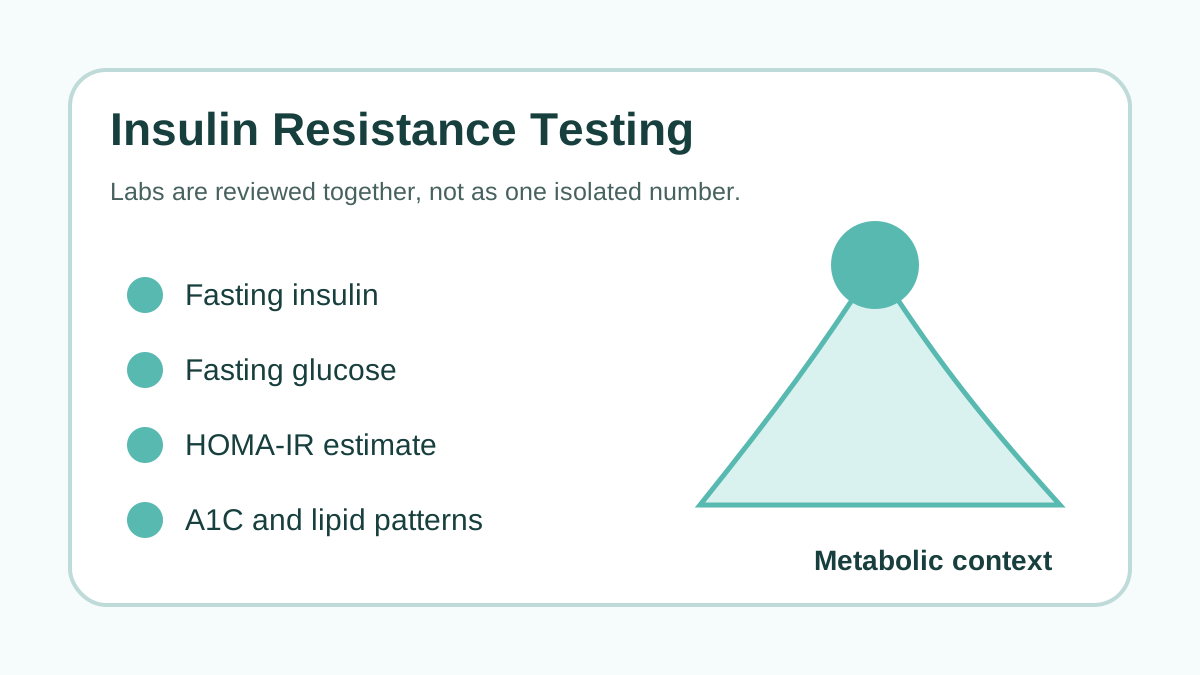
An insulin resistance test often reviews fasting insulin and fasting glucose together, then places those findings beside A1C, lipids, symptoms, and history. HOMA-IR may help estimate insulin resistance from fasting values, while broader labs show whether the pattern fits a larger metabolic concern.
An insulin resistance test is not always one stand-alone blood value. A clinician often looks at several markers together. Each marker answers a different question about blood sugar control, insulin demand, and metabolic stress.
The first view of insulin response
Fasting glucose shows the sugar present in the blood after an overnight fast. Fasting insulin shows how much insulin is present at that same point. A glucose result can look acceptable while insulin is working harder to keep it there.
When fasting glucose and fasting insulin are reviewed together, they can support a HOMA-IR calculation. HOMA-IR is a screening tool, not a full diagnosis by itself. It helps the clinician see a pattern that may be missed when glucose is reviewed alone.
| Lab marker | What it helps assess | Why it may be included |
|---|---|---|
| Fasting insulin | Insulin level while fasting | Shows insulin demand at baseline |
| Fasting glucose | Blood sugar while fasting | Pairs with fasting insulin |
| HOMA-IR | Calculated insulin resistance estimate | Adds context from fasting values |
| A1C | Longer-term glucose pattern | Broadens the glucose picture |
| Lipid panel | Triglycerides and HDL pattern | Reviews related metabolic markers |
Patterns across related markers
A1C and a lipid panel do not replace fasting insulin or fasting glucose. Instead, they help a clinician read the larger pattern. Triglycerides, HDL, blood pressure, and other findings may guide the discussion.
Insulin resistance is linked with dyslipidemia and cardiovascular conditions, as described in an Endotext review of insulin sensitivity. That is why metabolic testing may sit beside advanced cardiovascular testing when risk factors overlap.
Signs your plateau may be metabolic, not motivational
A plateau may deserve metabolic review when consistent habits no longer match results, especially with waist weight gain, cravings, meal-related fatigue, prediabetes, PCOS, or family history of type 2 diabetes. These signs do not diagnose insulin resistance, but they support a focused clinical discussion.
When steady effort stops matching the result
A weight loss plateau can be discouraging when meals, movement, and routines have stayed consistent. Some people also notice more belly fat, strong cravings, or a tired feeling after meals. These patterns do not prove insulin resistance. They give a clinician useful context for deciding what to check next.
Insulin resistance can occur without clear symptoms. The National Institute of Diabetes and Digestive and Kidney Diseases notes that many people do not learn about insulin resistance until prediabetes or type 2 diabetes develops.
Clues worth discussing with your clinician
A clinician looks at the full picture, not one symptom or one week of weight. Your history, lab results, medicines, sleep, eating pattern, and activity all matter. Bring up patterns such as these if they are part of your experience:
- Weight collecting around the waist despite steady efforts to manage it.
- Cravings or hunger that make a weight plan hard to sustain.
- Fatigue after meals or a repeated afternoon energy crash.
- A history of prediabetes or a close family history of type 2 diabetes.
- PCOS, or questions about how hormone and metabolic factors may overlap.
- Weight rebound after stopping a GLP-1 medicine.
These are discussion points, not a checklist for self-diagnosis. If testing fits your situation, an insulin resistance test can be part of a broader evaluation rather than a stand-alone answer.
Book a metabolic testing consultation if your weight loss effort has stopped matching your results.
How Transformity Health turns test results into a plan
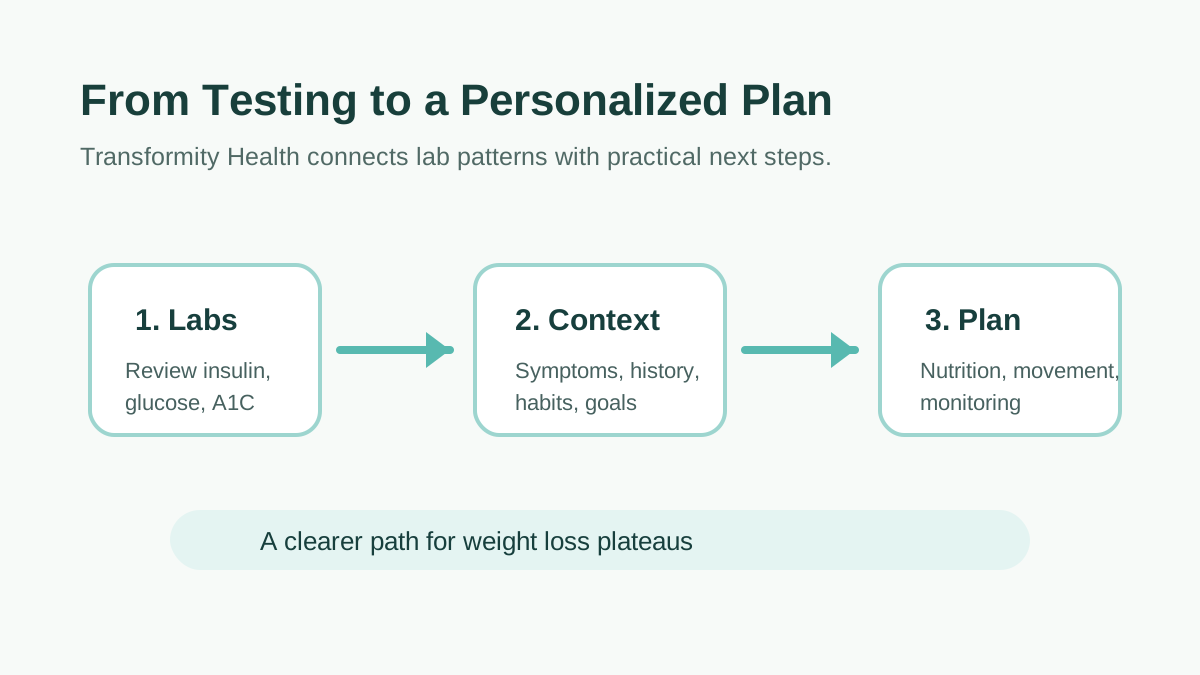
At Transformity Health in Hallandale Beach, test results are reviewed within a complete health picture. That includes symptoms, goals, medicines, nutrition, sleep, activity, family history, and related labs. The clinic’s functional medicine approach focuses on root causes, not isolated numbers.
A step-by-step care path
The clinic’s Harvard-trained MD/PhD leadership uses results to inform a personal care path. For people in Hallandale Beach and across South Florida, a visit can link testing with clear next actions.
-
Start with a consultation. The clinician reviews weight concerns, energy, meals, sleep, family history, medicines, and past lab work.
-
Review the lab pattern. Fasting glucose and insulin can be interpreted with other relevant markers. The goal is to understand the wider metabolic pattern.
-
Build practical nutrition goals. Food guidance can fit your results, daily routine, and health history.
-
Add support when appropriate. The plan may include supplements or support for hormone, gut, or metabolic health after clinical review.
-
Monitor progress. Follow-up visits can review symptoms, habits, and repeat testing when medically appropriate.
From a result to the next decision
A single number does not explain every weight loss plateau. A structured review helps link the result to steps a patient can follow. It also leaves room for medical oversight of broader concerns.
Patients exploring an advanced diagnostic evaluation can discuss how testing fits with nutrition, monitoring, and other care needs. This local path keeps the plan tied to findings rather than guesswork.
How is this different from generic weight loss advice?
Generic weight loss advice often starts with broad habits: eat less processed food, plan meals, sleep well, and stay active. Those habits may help, but they do not explain every stall on the scale. A diagnostic-led plan asks whether a measurable health factor changes the next step.
Behavior advice and metabolic context
The body’s response to insulin is one useful part of that review. Insulin resistance affects how liver, muscle, and fat tissue respond to insulin. The glucose clamp method is the reference standard for direct measurement of insulin sensitivity, while validated surrogate methods include HOMA-IR and QUICKI.
A test result does not serve as a stand-alone weight loss plan. Many people with insulin resistance have no symptoms before prediabetes or type 2 diabetes develops. For someone facing a plateau, that supports asking informed questions instead of assuming a lack of effort.
What a test can add
At Transformity Health, the functional medicine approach starts by looking for factors linked to the patient’s pattern. When glucose regulation is part of the concern, an insulin resistance test can inform a clinical discussion. This differs from telling every patient to repeat the same diet plan.
- Are the current food and activity steps realistic enough to continue?
- Does testing suggest reduced insulin sensitivity should be part of the plan?
- Do health history or lab findings call for a wider metabolic review?
Testing also creates a baseline for follow-up. A clinician can choose which measures to revisit based on the first evaluation and the care plan. That differs from changing diets again without knowing which health question needs attention.
Who should consider insulin resistance testing?
Consider asking about insulin resistance testing if weight loss has stalled despite consistent habits, or if you have prediabetes, PCOS, increased waist size, meal-related fatigue, strong cravings, or family history of type 2 diabetes. A clinician can decide whether testing fits your health history.
When weight efforts stop matching results
A weight loss plateau does not prove insulin resistance. Sleep, stress, food intake, movement, medicines, thyroid health, and hormone changes may also shape progress. Still, testing may help when steady habits bring little change, especially when weight gathers around the waist.
Some people also notice strong hunger, cravings, or tiredness after meals. These experiences can have many causes, so they are not a diagnosis. They are useful details to discuss during a clinical visit, along with your weight history and recent lab results.
Risk factors worth discussing
You may also want an evaluation if you have been told you have prediabetes. A family history of type 2 diabetes is another reason to start the conversation. So are past blood sugar concerns or health changes that point to a broader metabolic review.
- Weight that is hard to reduce despite consistent habits.
- Prediabetes or prior concern about blood sugar levels.
- A family history of type 2 diabetes.
- PCOS with questions about metabolic health.
- Increased waist size, meal-related fatigue, hunger, or cravings.
If you have PCOS, testing should fit into your full care plan. Your clinician can consider symptoms, cycle history, medicines, pregnancy plans, and other labs. Testing is most useful when it guides a practical next step in care.
Frequently Asked Questions
What test is used for insulin resistance?
There is no single routine test for every patient. A clinician may review fasting insulin and fasting glucose together, often using HOMA-IR as a practical estimate. The Endotext review describes the glucose clamp as the reference standard for directly measuring insulin sensitivity. Test choice depends on symptoms, history, and the purpose of the evaluation.
Can insulin resistance make it hard to lose weight?
Insulin resistance may be one factor in a weight loss plateau, but it is not the only possible cause. It can occur while glucose remains in range because the body produces more insulin to manage glucose. Weight loss and physical activity can improve the body’s response to insulin for many people.
Is fasting insulin the same as glucose?
No. Fasting glucose measures the amount of sugar in the blood after fasting. Fasting insulin measures the hormone involved in moving glucose into cells. Someone may have normal fasting glucose while producing extra insulin to maintain it. For that reason, a clinician may interpret both results together.
What labs show insulin resistance?
Evaluation often begins with fasting glucose and fasting insulin, which can be used to estimate HOMA-IR. Depending on individual risk factors, a clinician may also review A1C and lipid markers. Results should be interpreted in clinical context, not used alone to choose treatment.
Ready to address a weight loss plateau with clarity?
Waiting while weight loss stalls can leave you repeating changes without understanding what may be slowing your progress. Starting now can help you move from uncertainty toward a plan based on your metabolic testing needs.
Instead of continuing to adjust your approach without direction, take the next step with questions prepared for a clinical conversation. Schedule an insulin resistance testing consultation to discuss weight loss guidance and a personalized plan.